In October 2025, the world said goodbye to Frank Gehry, one of the most influential architects of our time. His buildings were not structures they were emotions in motion, waves of titanium, sculptural forms, and impossible curves that challenged everything we thought architecture could be. Few artists have transformed cities the way he did, and few buildings have reshaped an entire region the way the Guggenheim Museum Bilbao transformed the Basque Country.
To speak of art in Bilbao is, inevitably, to speak of Gehry.
Origins of a revolutionary mind
Born Ephraim Goldberg in Toronto in 1929 to Jewish immigrant parents, Gehry grew up surrounded by craftsmanship and imagination. His grandmother encouraged his creativity by giving him wood blocks to build cities on the floor, and this early fascination with form, balance, and structure would define his life’s work.
After moving to Los Angeles as a teenager, Gehry embraced the city’s spirit of experimentation. It was there that he developed his own architectural language, one that resisted symmetry, celebrated movement, and treated buildings as living sculptures.
What made Frank Gehry unique
Gehry was never interested in architecture that simply followed rules. His work was emotional, daring, and deeply human. A few traits defined his genius:
Fluid, undulating forms that felt alive
Buildings that changed with light and time
Unconventional materials elevated into art
A focus on how people experience space rather than how it behaves on paper
He once said, “Architecture should speak of its time and place, but yearn for timelessness”, and he achieved exactly that.
Landmarks that changed the world
Some of Gehry’s most celebrated works include:
Guggenheim Museum Bilbao 1997 the masterpiece that transformed Bilbao into a global cultural destination
Walt Disney Concert Hall Los Angeles 2003 a radiant composition in stainless steel with world renowned acoustics
Fondation Louis Vuitton Paris 2014 a glass vessel floating in the Bois de Boulogne
Dancing House Prague 1996 an audacious expression of movement and imagination
8 Spruce Street New York 2011 a residential tower whose facade ripples like fabric in the wind
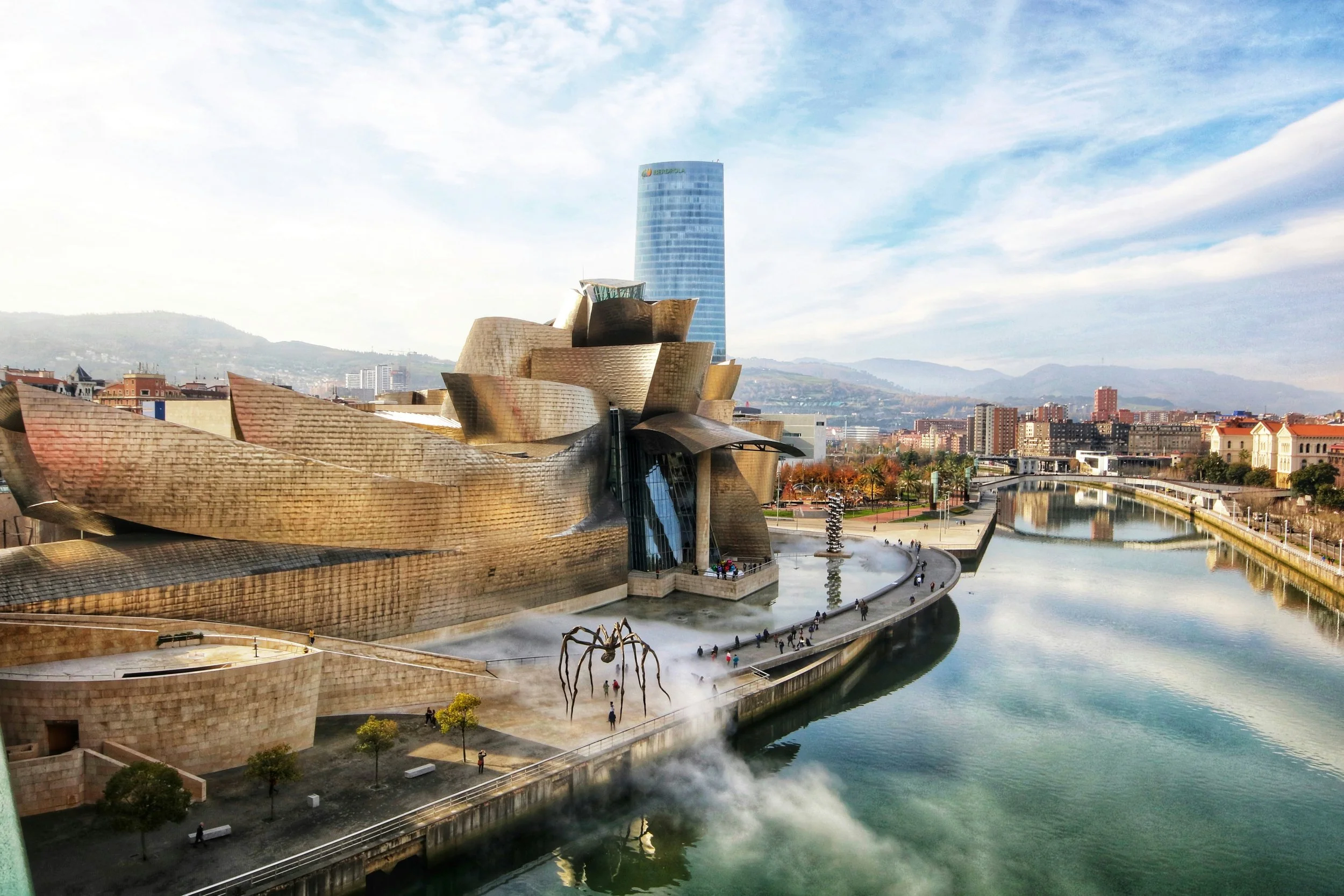
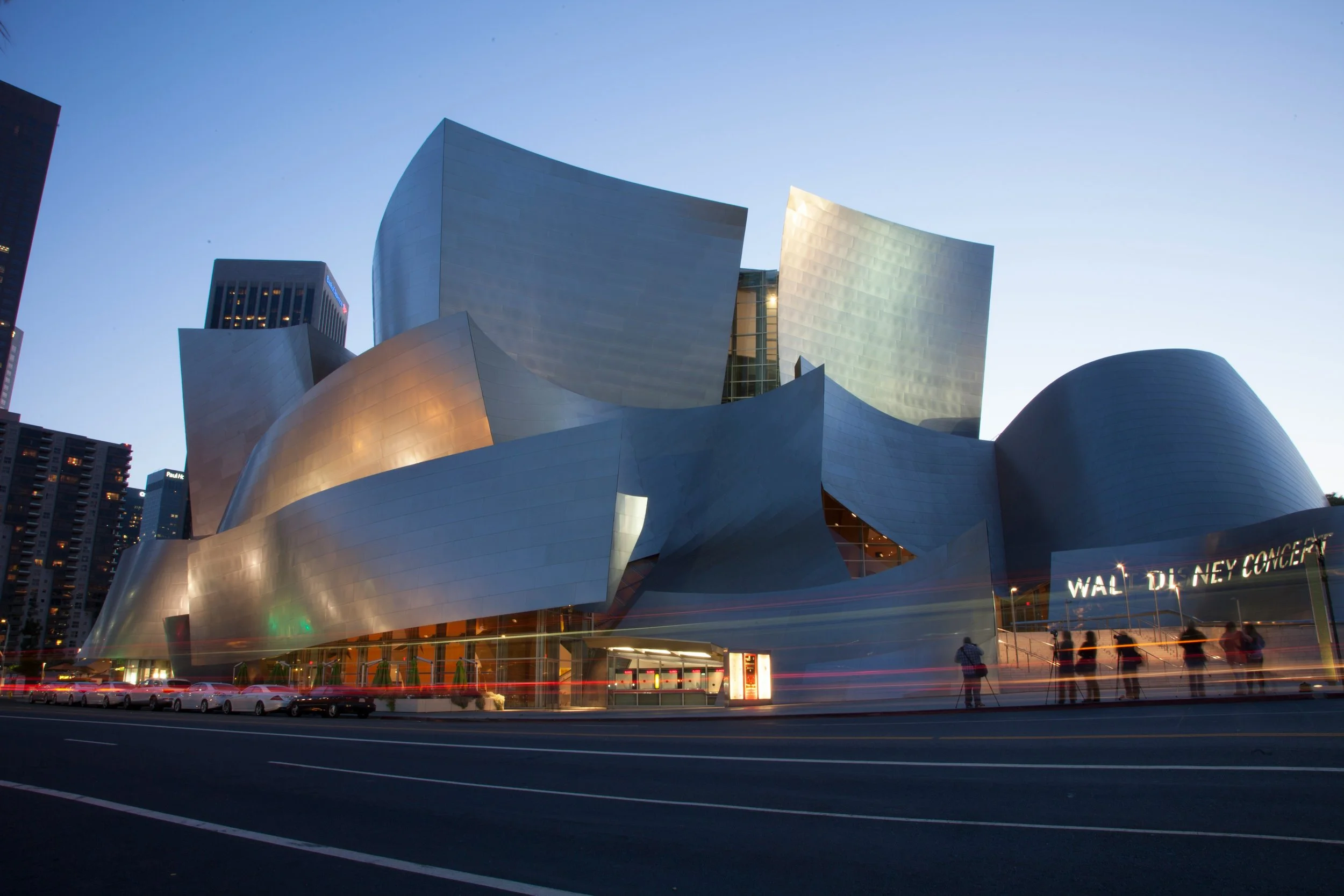
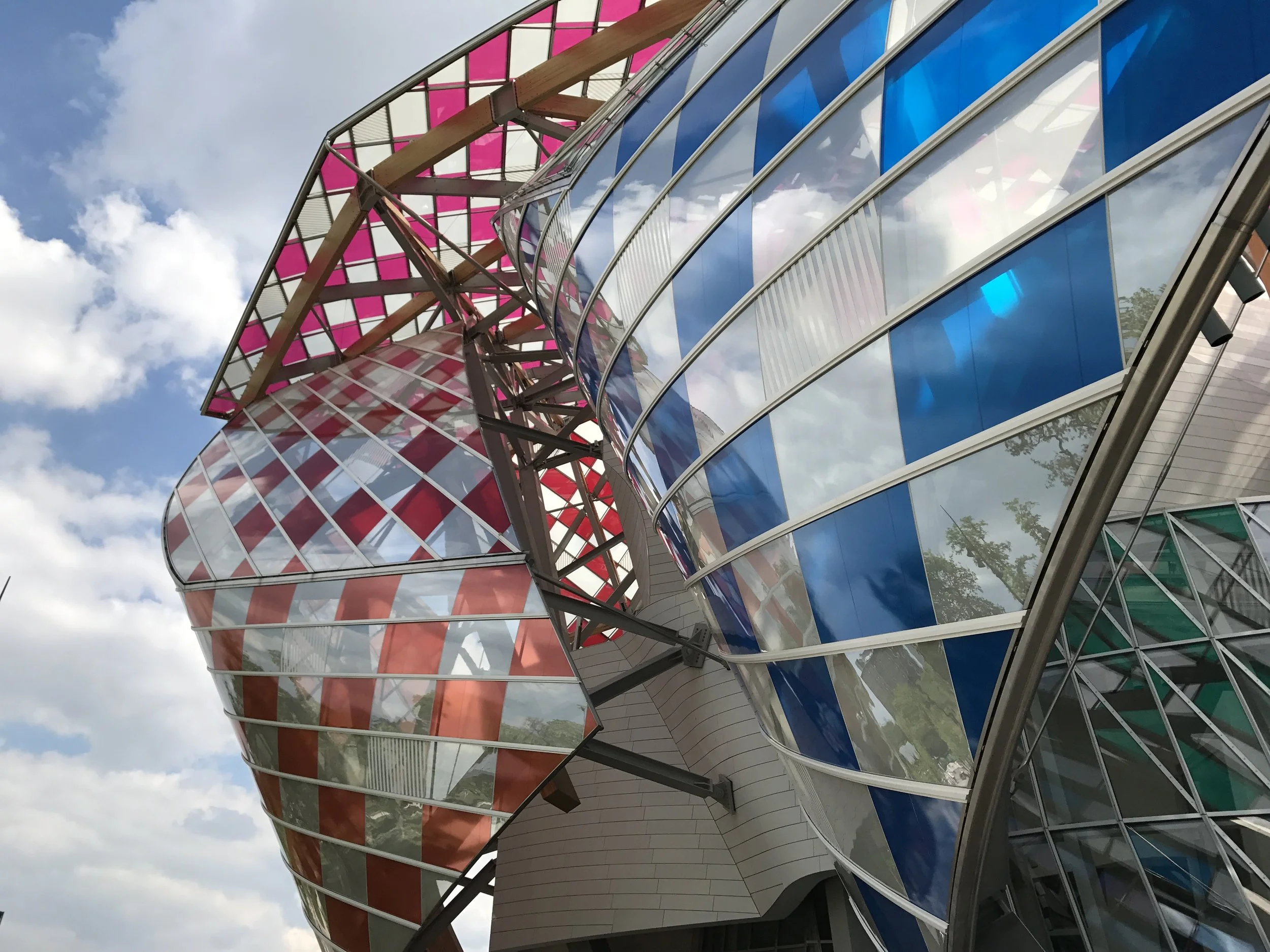

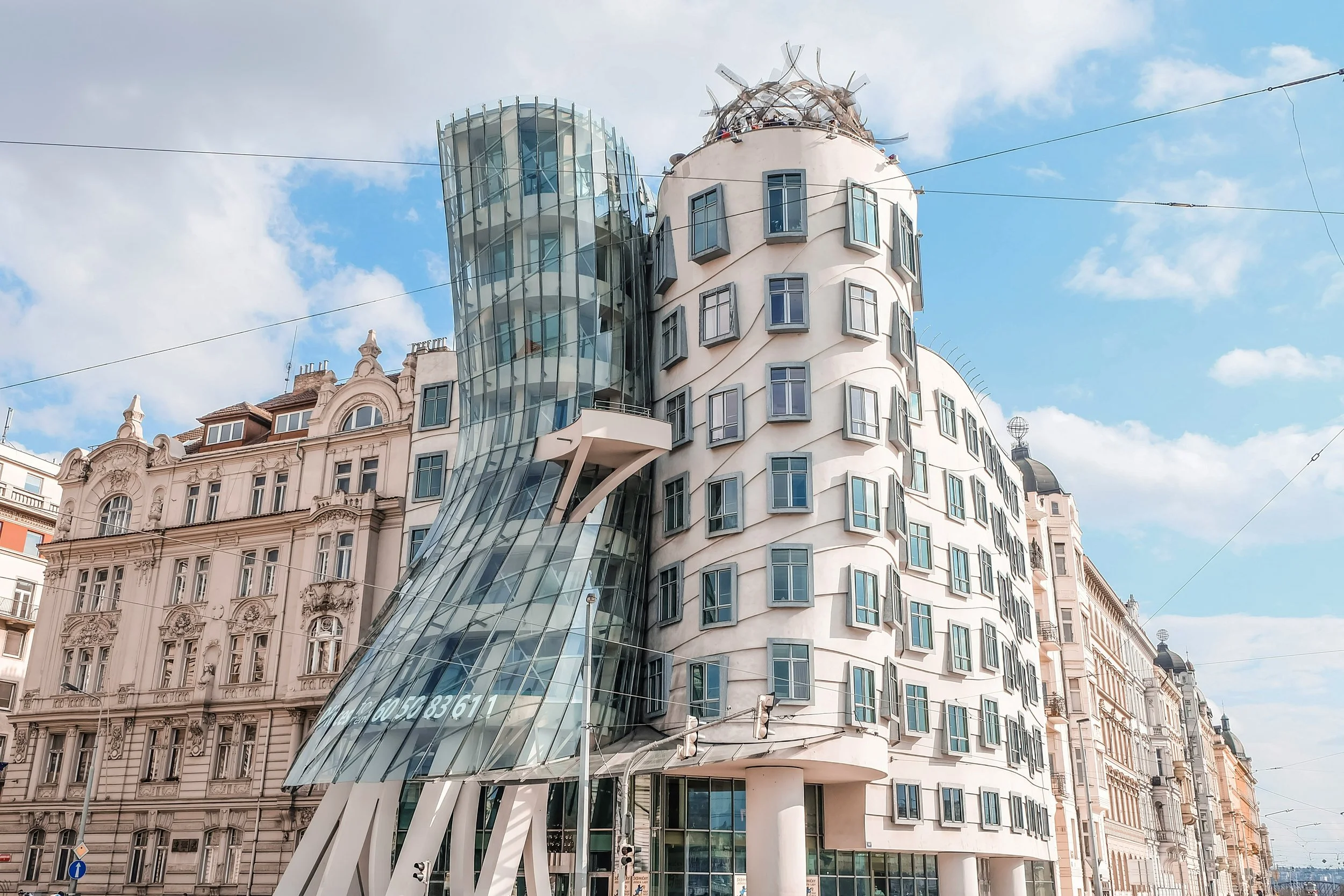
Yet it is the Guggenheim Bilbao that remains his most transformative achievement.
The Guggenheim Bilbao: Where Gehry’s vision meets the soul of the Basque Country
When the Guggenheim opened in 1997, critics called it “the greatest building of our time.” Gehry’s creation on the Nervion River was not just a museum it was a cultural awakening.
Titanium scales mirroring the Basque light
Volumes folding and twisting like a sculpture
Spaces that invite wonder and contemplation
The museum became a symbol of renewal and proof that architecture can redefine a city’s identity.
Art in Bilbao curated by Ángeles Sánchez
Ángeles offers travelers the rare opportunity to experience the Guggenheim in a way few ever do.
Private access, after hours, with the museum closed to the public.
A guided journey through its monumental galleries, followed by an exclusive dinner prepared by Michelin starred chefs inside the building.
Here, architecture and gastronomy come together in an unforgettable dialogue.
Gastronomy in Biscay: Where fire becomes art
Beyond Bilbao’s artistic symbols, the valleys of Biscay hold another form of mastery the craft of Basque grilling. Ángeles can secure reservations at Asador Etxebarri, considered one of the most coveted restaurants in the world.
Guests enjoy a rare encounter with chef Bittor Arginzoniz, whose approach to cooking is defined by simplicity, precision, and a deep respect for ingredients. Every dish becomes a study in purity and restraint.
It is the perfect complement to Gehry’s architecture both represent a devotion to craft, creativity, and the art of elevating the essential into the exceptional.
A tribute to Gehry a celebration of Bilbao
As the world reflects on Frank Gehry’s legacy, Bilbao stands as one of his most powerful gifts a city transformed by imagination, courage, and beauty. For travelers who explore it with Ángeles, the Guggenheim becomes more than a landmark it becomes a story, a memory, and a moment in the presence of genius.